
AI in Film Industry: Complete Guide with Real Examples (2026)
AI in film industry is transforming how movies are written, filmed, edited, and distributed. From Hollywood blockbusters using AI-powered visual effects to independent filmmakers producing professional films on tiny budgets, artificial intelligence is reshaping every stage of cinema. This complete guide covers real examples, top AI filmmaking tools, industry impacts, ethical debates, and what the future holds for AI and movies in 2026.
Hollywood and independent studios alike are integrating AI across every stage of film production in 2026.
- How AI is Changing the Film Industry
- 8 Key Areas Where AI is Used in Filmmaking
- Real Examples: Hollywood Films Using AI
- Best AI Tools for Filmmakers in 2026
- Impact of AI on Film Industry Jobs
- AI for Independent Filmmakers
- Ethics and Controversies Around AI in Film
- The Future of AI in the Film Industry
- Frequently Asked Questions
💡 In January 2026, McKinsey published a landmark report on AI's impact on film and TV production — forecasting wide-scale democratization of professional content creation and the rise of entirely new content formats. This guide synthesizes that research alongside the latest real-world examples from Hollywood in 2026.
🎬 How AI is Changing the Film Industry in 2026
The role of AI in the film industry has accelerated dramatically in the past two years. What was once confined to experimental short films and research labs is now embedded inside mainstream Hollywood studios, streaming platforms, and independent production houses worldwide.
Artificial intelligence is now involved at every stage of the filmmaking pipeline — from writing the initial screenplay idea to distributing the finished film to global audiences. Studios are using AI to analyze which scripts are most likely to succeed commercially, generate concept art and storyboards in hours instead of weeks, remove objects from scenes without green screens, restore the faces of deceased actors with photorealistic accuracy, and even compose original film scores.
According to McKinsey's January 2026 analysis of AI in film and TV, three major industry shifts are underway simultaneously: AI is scaling changes to existing production workflows, democratizing professional-grade content creation for independent creators, and enabling entirely new content formats that did not exist before.
The most important point to understand about AI in the film industry is this: it is not replacing human creativity. The most successful applications of AI in cinema are collaborative — AI handles the time-consuming, expensive, technically complex parts of filmmaking, freeing human directors, writers, and artists to focus on the creative decisions that only humans can make.
✅ Key insight: The filmmaker who uses AI will replace the filmmaker who does not — not AI itself. The studios and creators learning to harness these tools today are building an insurmountable competitive advantage for the next decade.
🎯 8 Key Areas Where AI is Used in Filmmaking Today
AI's presence in the film industry spans the entire production cycle. Here are the eight most significant areas where AI tools are actively being used in 2026:
1. Script Development & Story Analysis
AI tools analyze thousands of successful scripts to identify story patterns, pacing issues, character arc weaknesses, and commercial viability. Studios use AI to predict how a script will perform before spending a dollar on production, reducing the risk of expensive failures.
2. Concept Art & Storyboarding
AI image generators like Midjourney and Adobe Firefly can produce dozens of high-quality concept art variations in hours. What previously took weeks of artist time now happens overnight — allowing directors to visualize and refine their creative vision before pre-production begins.
3. Visual Effects (VFX)
AI has revolutionized VFX production. Background removal, object erasure, de-aging actors, crowd simulation, and sky replacement — tasks that once required large teams of specialist artists — are now handled by AI tools in a fraction of the time and cost.
4. AI Video Generation
Tools like Runway Gen-4, Google Veo 3, and Kling 3.0 can generate photorealistic video scenes from text prompts. In 2026, these are being used for establishing shots, background plates, b-roll footage, and even full scenes in experimental and independent productions.
5. Digital Actor Recreation
AI enables studios to digitally recreate the likeness of deceased actors with their estate's permission, de-age living actors for flashback scenes, and create fully synthetic digital characters that are indistinguishable from real people — raising both exciting possibilities and serious ethical questions.
6. Editing & Post-Production
AI-powered editing tools in Adobe Premiere Pro and DaVinci Resolve can analyze footage, suggest cuts based on emotional content and narrative structure, automate color grading, and generate rough assembly cuts that editors then refine — compressing weeks of work into days.
7. AI Music Composition
AI music tools can generate original film scores in any style, tempo, and emotional tone — timed precisely to match the rhythm of scenes. Independent filmmakers use these tools to avoid expensive music licensing fees while getting professional-quality soundtracks tailored to their exact needs.
8. Distribution & Audience Analytics
Streaming platforms use AI to predict which films will resonate with specific audience segments, optimize marketing spend, personalize recommendations, decide which projects to greenlight, and even determine optimal release timing for maximum viewership and revenue.
🌍 Real Examples: Hollywood Films and Studios Using AI
Major Hollywood studios including Disney, Lionsgate, and Netflix are all actively integrating AI into their production workflows in 2026.
Example 1: Lionsgate Partners with Runway AI
Lionsgate — one of Hollywood's largest independent studios, home to franchises including The Hunger Games, John Wick, and Twilight — announced a landmark partnership with Runway, the leading AI video generation company. The deal allows Runway to train a new AI model using Lionsgate's library of over 20,000 films and TV shows. According to First Movers' analysis, this marked the first instance of a major Hollywood studio embracing AI technology so comprehensively. Lionsgate emphasized that the goal is augmentation, not replacement — using AI to analyze scripts, identify storytelling opportunities, and streamline early-stage production planning.
Example 2: The Brutalist — AI Accent Modification
The Brutalist, an Oscar-nominated film, made headlines when it was revealed that AI technology had been used to adjust the Hungarian accents of actors in the film. The production used AI audio tools to subtly modify pronunciation and speech patterns in post-production to improve authenticity. The disclosure sparked significant debate about the ethics of AI in film and prompted the Academy of Motion Picture Arts and Sciences to consider requiring filmmakers to disclose AI use when submitting films for award consideration — a policy that could reshape how AI is discussed and credited in Hollywood.
Example 3: Viral AI DeepFake — Tom Cruise and Brad Pitt
In February 2026, Irish filmmaker Ruairi Robinson created a 15-second AI-generated video of Tom Cruise battling Brad Pitt using ByteDance's Seedance 2.0 tool. The clip went massively viral — and unlike most AI-generated videos, the actors looked convincingly real. Disney sent a cease-and-desist letter, and SAG-AFTRA condemned the "blatant infringement" of actors' likenesses. The incident highlighted two realities simultaneously: the extraordinary capability of 2026's AI video tools, and the urgent need for legal frameworks governing AI and likeness rights in the film industry.
Example 4: Roger Avary — Full AI Feature Films in Production
In February 2026, Academy Award-winning screenwriter Roger Avary (Pulp Fiction) announced via his technology company General Cinema Dynamics that he has three full-length feature films in active AI-assisted production. Avary made a striking comparison: "What used to be a million dollars a minute is now $5,000 a minute, to do it really, really well." His announcement signals that serious, credentialed filmmakers are now embracing AI not as a gimmick but as a fundamental production tool for independent cinema.
Example 5: Google DeepMind's ANCESTRA
Google DeepMind produced ANCESTRA, a short film made using a hybrid production model that combines traditional live-action filmmaking with AI-generated video sequences. ANCESTRA is significant because it represents the current state-of-the-art in serious AI film production — not a fully automated film, but a thoughtful integration of AI tools into a human-directed creative process. The film demonstrates that AI-generated video is now mature enough for professional use in real productions.
Example 6: Darren Aronofsky — AI-Animated Historical Series
Director Darren Aronofsky's studio Primordial Soup released On This Day… 1776 — an AI-animated Revolutionary War series — on Time's YouTube channel. The fact that a filmmaker of Aronofsky's caliber is actively using AI for serious storytelling projects signals a fundamental shift in how the film world perceives these tools. It is no longer just experimenters and tech enthusiasts — established auteur directors are integrating AI into their creative process.
🛠️ Best AI Tools for Film Industry Professionals in 2026
These are the most powerful and widely used AI tools across every stage of film production. Each tool below is actively being used by filmmakers, studios, and content creators in 2026:
🎬 AI Video Generation Tools
✨ AI Visual Effects & Post-Production
📝 AI Scriptwriting & Development Tools
📊 Impact of AI on Film Industry Jobs — The Real Numbers
The impact of AI in the film industry on employment is real, significant, and happening now. According to reporting from The Conversation's 2026 Hollywood AI analysis, 41,000 jobs in film and television have disappeared in Los Angeles County alone over the past three years. The Animation Guild's 2024 report predicted that by 2026, "creative workers will be facing an era of disruption" — and those predictions have largely come true.
| Film Role | AI Impact | Demand Change | Future Outlook |
|---|---|---|---|
| Concept Artist | AI generates concept art in minutes | ↓ Declining | Shift to AI art direction roles |
| VFX Compositor | AI automates rotoscoping, background removal | ↓ Declining | Senior roles remain; junior roles at risk |
| Film Editor | AI generates rough cuts and suggests edits | → Evolving | AI assistant editors emerge as new role |
| Screenwriter | AI assists in brainstorm and development | → Evolving | AI-human collaboration becomes standard |
| AI Cinematographer | New role — prompts and directs AI video tools | ↑ Growing Fast | High demand, premium salaries emerging |
| AI Video Producer | Manages end-to-end AI film workflows | ↑ Growing Fast | One of fastest-growing creative roles in 2026 |
| Director / Creative Lead | AI assists but cannot replace creative vision | ↑ Stable | More powerful with AI tools; irreplaceable |
⚠️ Junior compositing jobs are down 40% globally in 2026. However, a new role has emerged: "AI Cinematographer" — professionals who understand both traditional filmmaking craft and AI prompt engineering. These roles are commanding premium salaries as demand far outpaces supply.
🎥 AI in Film Industry: A Revolution for Independent Filmmakers
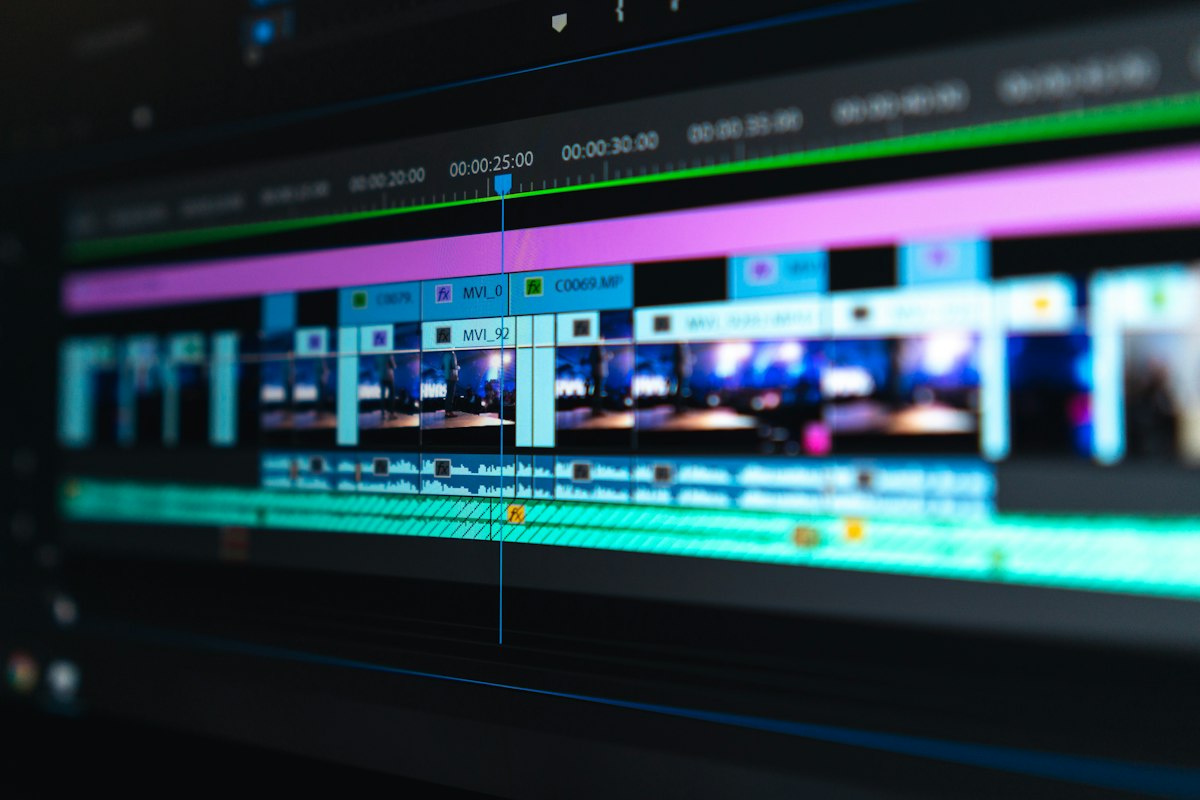
AI has collapsed the production cost barrier for independent filmmakers — a solo creator with a laptop can now produce visuals that previously required a full crew and $200,000 budget.
The most democratizing impact of AI in the film industry is felt most by independent creators. For the first time in cinema history, a solo filmmaker with a modest budget can produce content at a visual quality that previously required Hollywood-scale resources.
Consider this real example: an independent filmmaker in Austin, Texas created a 7-minute short film using AI-generated video in just three weeks — a project that would normally take 3 to 4 months and cost ten times more. The key tools used were Runway Gen-4 for video generation, ElevenLabs for voice and audio, Claude for screenplay formatting, and Adobe Premiere Pro 2026 for the final edit.
The 2026 Indie AI Filmmaker Starter Pack
- Screenplay: Claude or ChatGPT for drafting, refining, and formatting scripts
- Storyboards: Midjourney or Adobe Firefly for concept art and shot planning
- Video Generation: Runway Gen-4 or Kling AI 3.0 for scene generation
- Voice & Audio: ElevenLabs for narration, dialogue, and custom character voices
- Music: Suno AI or Udio for original AI-composed film scores
- Editing: Adobe Premiere Pro 2026 or DaVinci Resolve (free) for final cut
- Total monthly cost: Approximately $50–$150 per month for professional-level tools
As McKinsey noted, entrepreneurs and AI-enabled creators can now tell their stories and reach global audiences through open distribution platforms at near-zero cost — something that was completely impossible even five years ago. As George Strompolos, co-founder of Promise, put it: "The creator economy was about the democratization of distribution. This is about the democratization of production and creation itself."
⚠️ Ethics and Controversies: The Difficult Side of AI in Film
The rapid integration of AI in the film industry has not been without serious controversy. These are the most pressing ethical debates that the industry is actively grappling with in 2026:
Actor Likeness and Consent
The Tom Cruise / Brad Pitt deepfake video in February 2026 made the likeness rights question impossible to ignore. SAG-AFTRA has fought hard to ensure actors must consent to AI recreation of their likeness. Without legal protection, any actor's face could be digitally placed in any content without permission or payment.
Job Displacement
41,000 film and TV jobs have already disappeared in Los Angeles. Entry-level roles — concept artists, junior compositors, background actors — face the highest risk. The Animation Guild warned that many of these roles will be permanently eliminated rather than transformed, raising real concerns about career pathways in the industry.
Copyright and Training Data
AI video models are trained on vast libraries of existing film footage. Disney sent a cease-and-desist over the viral deepfake video, citing its copyrighted characters as part of the training data. The legal question of whether AI models can be trained on copyrighted content without permission or compensation is being actively litigated in US courts.
Creative Authenticity
Audiences and critics are debating whether AI-assisted filmmaking represents genuine artistic creation or sophisticated automation. The Academy of Motion Picture Arts and Sciences is considering mandatory AI disclosure requirements, signaling that the industry is treating AI use as information audiences deserve to know.
Deepfake Misinformation
Tools capable of generating realistic video of any person saying or doing anything pose serious misinformation risks beyond entertainment. The "Digital Replica Rights Act" now requires all AI-generated video featuring human likenesses to carry a visible digital watermark in the US — a first step toward regulation.
Cultural and Creative Homogenization
AI trained on predominantly Western and English-language content may produce culturally homogeneous output when applied globally. Critics warn that AI filmmaking tools could reduce global cinema diversity if independent voices in developing countries are priced out by US-built, US-biased AI tools.
🎯 The Cannes Film Festival's Marché du Film 2026 has dedicated an entire "AI for Talent Summit" specifically to the ethical and responsible use of AI in film — addressing integration into production workflows, ethical frameworks, and education. The fact that Cannes is treating this as a top-level industry discussion signals how central this debate has become.
🔮 The Future of AI in the Film Industry
Looking at the trajectory of AI in the film industry through 2026 and beyond, several powerful trends are converging to define what cinema will look like in the next five years:
Hybrid Production Becomes the Standard
The strongest real-world AI film productions today are all hybrid — AI generates environments, backgrounds, and visual elements while human directors, actors, and cinematographers handle performance, narrative, and creative vision. This model will become the dominant production framework across every budget level. Studios that master the hybrid workflow first will have enormous cost and speed advantages over competitors still working in traditional production models.
Micro-Studios Rise to Challenge Major Studios
As AI lowers the cost of producing polished film content, McKinsey's 2026 report explicitly predicts the emergence of more "micro-studios" — small teams of 2 to 10 people producing professional-quality films that compete with major studio output. This is analogous to how desktop publishing disrupted traditional publishing in the 1990s, and how smartphone cameras disrupted broadcast television with the rise of YouTube.
Real-Time AI Direction
Directors can now interact with AI-generated scenes in real time rather than waiting for render queues that previously took hours. This transforms the creative process — direction happens in the moment, not through static prompts submitted and reviewed days later. The creative feedback loop collapses from weeks to minutes.
Integrated Create-and-Distribute Platforms
McKinsey's analysis envisions fundamentally new platforms that combine AI-powered creation and global distribution in one environment — similar to how TikTok and CapCut combine creation tools and distribution. DreamFlare is an early example: a hybrid platform where creators publish AI-enhanced visual stories directly to audiences, who vote on which concepts are developed into full series.
AI Characters and Synthetic Actors
Companies like Synthesia and Nvidia are producing increasingly convincing AI avatars — digital personalities that are sometimes indistinguishable from real humans on screen. Within 3 to 5 years, fully synthetic AI actors — trained on vast libraries of human performance data — may appear in supporting roles in mainstream films, with clear legal consent frameworks and residual payment systems for the human actors whose performances trained the models.
❓ Frequently Asked Questions About AI in the Film Industry
📚 Sources & Further Reading
- 🎬 McKinsey — What AI Could Mean for Film & TV Production (Jan 2026) — Comprehensive industry analysis of AI's impact on filmmaking
- 🎬 The Conversation — Hollywood Grapples with AI's Growing Influence (2026) — In-depth look at job losses and studio responses
- 🎬 Deadline — Roger Avary Announces 3 AI Films in Active Production (Feb 2026) — Academy Award winner embraces AI filmmaking
- 🎬 Hollywood Reporter — Cannes 2026 AI for Talent Summit — Industry's leading film market response to AI
- 🎬 Runway ML — Professional AI Video Generation Platform — Industry-standard AI filmmaking tool
- 🎬 DigitalDefynd — 10 Ways AI is Being Used in Movie Making (2026) — Detailed case studies including Lionsgate and Netflix
- 🎬 Frameo AI — Top AI Generated Movies Transforming Film Industry — Analysis of real AI film productions including ANCESTRA
- 🎬 IndieWire — Bold Hollywood Predictions for 2026 — Industry forecasts on AI's role in streaming and studios
💬 Final Thoughts
AI in the film industry is not a future trend — it is a present reality reshaping cinema at every level. From Hollywood studios reducing their VFX budgets by 40% using AI compositing tools, to independent filmmakers creating professional short films for a few hundred dollars, the transformation is already underway and accelerating.
The most important takeaway for anyone working in film — whether as a director, editor, writer, VFX artist, or studio executive — is that the winners of this transition will be those who learn to use AI as a creative amplifier rather than viewing it as a threat to resist. The tools available in 2026 are genuinely extraordinary. Used thoughtfully, they expand what is possible for human storytelling rather than diminishing it.
At the same time, the ethical questions — likeness rights, fair compensation, creative attribution, and the protection of entry-level career pathways — demand serious, industry-wide attention. Technology without ethics is not progress. The film industry has an opportunity to set a global standard for responsible AI adoption that protects both creativity and the people whose craft built Hollywood.
Want to Use AI to Grow Your Business?
Wasay AI Growth Lab helps entrepreneurs, creators, and businesses across all industries implement AI tools that deliver real, measurable results. Get a free consultation and start your AI journey today.